

Value Stream Analysis: Definition, Method & Digital Implementation
Value stream analysis is a tried-and-tested lean management method for the systematic
optimisation of production and logistics processes. It visualises the entire
value stream of a product – from raw material procurement to delivery – and
systematically identifies waste, bottlenecks and opportunities for improvement.
Traditional value stream mapping is typically carried out using pen and paper.
However, this method has its limitations: it cannot depict dynamic interactions
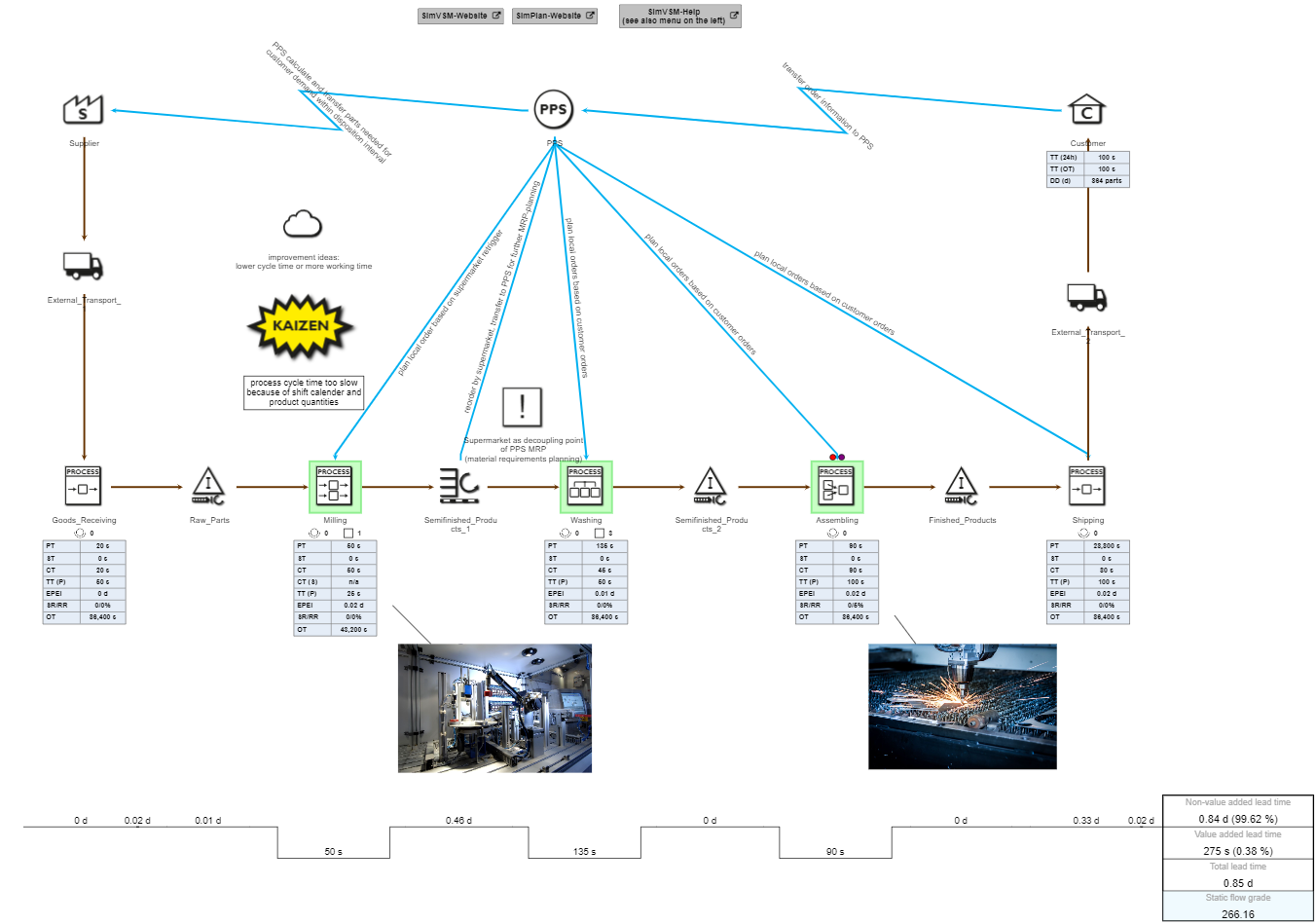
between processes. Digital value stream mapping using
simulation software overcomes this limitation – different scenarios can be tested before
they are implemented in practice.
On this page, we explain the method, provide practical examples and show you how to
successfully introduce value stream mapping into your organisation.
Further reading
What information does a classic value stream analysis provide?
The classic method provides initial key figures and indications of:
- Waiting times and inventories
- Incorrect planning specifications, e.g. processing times
- Quality or delivery problems
- Missing information or data
It thus provides a solid basis for process optimisation – but usually remains static and two-dimensional.
What are the limitations of the classic method?
A classic value stream analysis cannot map dynamic interactions between processes.
For example, it is not possible to examine how
- different buffer sizes,
- set-up times or
- variant diversity
affect the overall material flow and productivity.
This is where pen and paper reach their limits – and where the digital solution comes into play.